
Our Concerns - Environmental Impact
Chemical breakdown products can persist in the environment, posing long-term risks. The absence of thorough monitoring increases uncertainty about their impact.
Protecting Our Environment
Our community is facing an environmental crisis due to the Fire Ant Eradication Program, which has led to the poisoning of livestock, waterways, and local flora and fauna. We are dedicated to highlighting these issues and demanding immediate action to prevent further damage.
Joshua King Letter and Video
Open letter to Australia by Dr Joshua King, Entomologist, University of Central Florida, outlining concerns with current eradication strategy. (link to letter ...our concerns / eradication vs management).
Concerns About Chemical Breakdown and Environmental Safety
Breakdown products of pyriproxyfen are as toxic as the parent chemical and some have longer half-lives than the active ingredient.
Fipronil is a PFAS pesticide. PFAS are recognized as Class 1 carcinogens. Banned from outdoor use in the EU.
The withholding periods set for organic farms appear to be based only on the primary chemical breakdown, not metabolites.
The safety of deployment within meters of waterways is questionable for pyriproxyfen and fipronil. EPA in NSW has refused to do any monitoring of rivers at all.
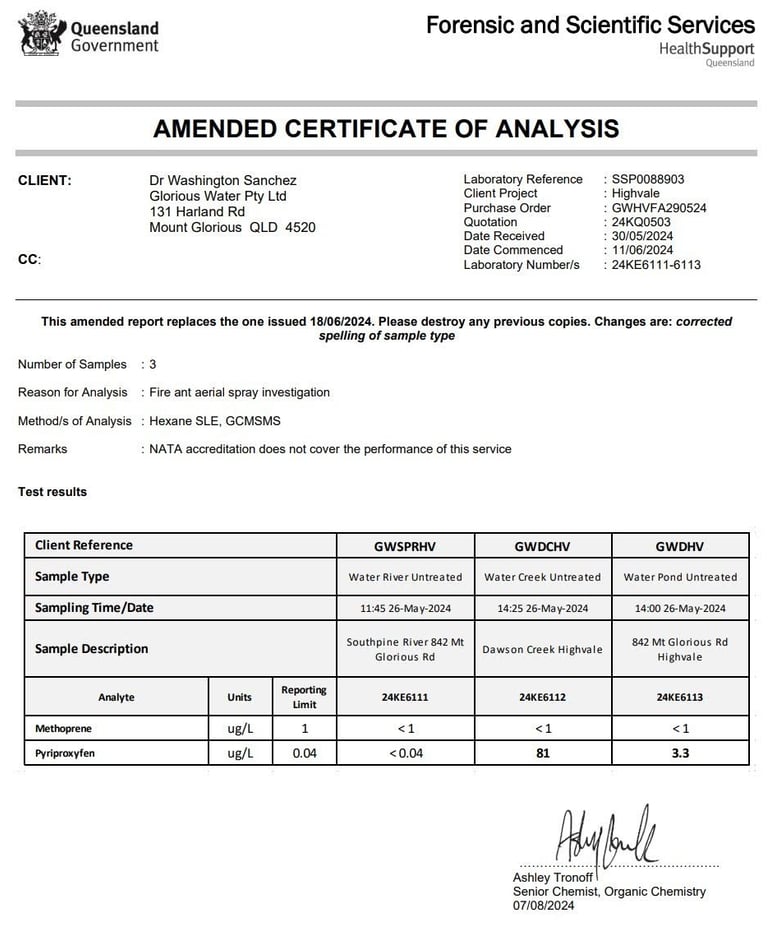
Water Analysis Report from Dawson Creeks after the Aerial Treatment
Water Quality Impact Analysis
This report details the analysis of water quality in Dawson Creeks following aerial treatment. It examines chemical residues, their environmental impact, and outlines necessary actions to address any identified issues.
Extracts from Water Analysis
For instance, Pyriproxyfen has been shown to be particularly harmful to crustaceans and fish, causing developmental and reproductive issues even at low concentrations. The detected level of Pyriproxyfen in Dawson Creek (81 μg/L) is alarmingly high, significantly exceeding safe environmental concentrations. This could lead to severe ecological consequences, such as reduced fish populations and impaired ecosystem health.
Sample Analysis
South Pine River (11:45 sample): Both Methoprene and Pyriproxyfen were below detectable levels, suggesting minimal contamination at this site during the sampling time.
Dawson Creek (11:45 sample): Pyriproxyfen concentration was 81 μg/L, indicating a serious pollution event. Methoprene was below detectable levels.
South Pine River (14:00 sample): Pyriproxyfen was detected at 3.3 μg/L, still above typical safe limits, although not as extreme as in Dawson Creek. Methoprene remained below detectable levels.
This information is provided for general guidance only. This information does not guarantee any particular outcome and should not be considered legal advice. Please consult a qualified professional for specific advice tailored to your situation.