Robotic Dogs for Red Imported Fire Ant Detection and Surveillance
The Red Imported Fire Ant (RIFA), scientifically known as Solenopsis invicta, is a destructive invasive species causing considerable harm to ecosystems and generating substantial economic costs globally
SAFER ALTERNATIVES
6/8/20251 min read
Research Article
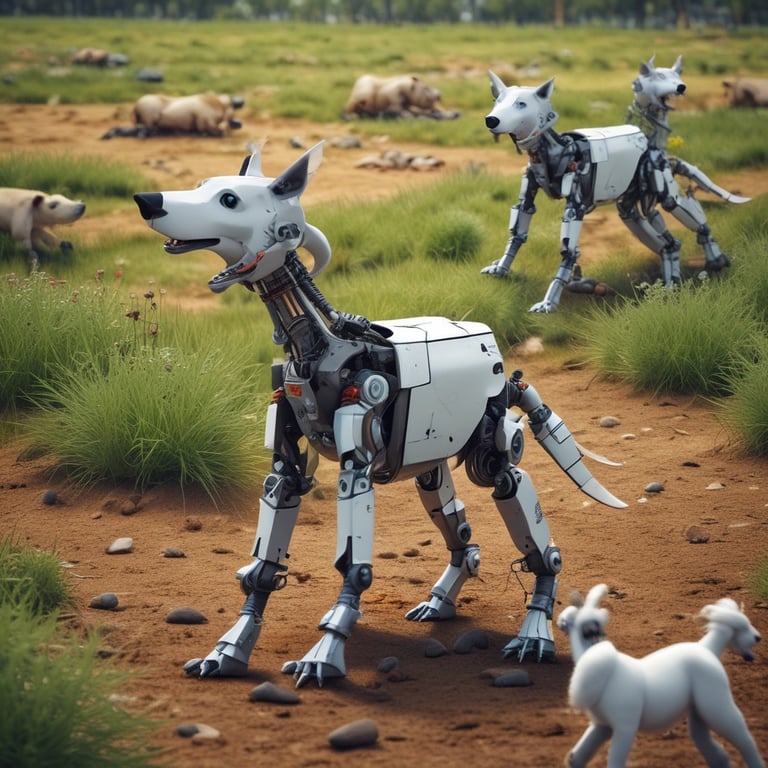
The implementation of robotic dogs in automatic detection and surveillance of red imported fire ant nests
Abstract
BACKGROUND
The Red Imported Fire Ant (RIFA), scientifically known as Solenopsis invicta, is a destructive invasive species causing considerable harm to ecosystems and generating substantial economic costs globally. Traditional methods for RIFA nests detection are labor-intensive and may not be scalable to larger field areas. This study aimed to develop an innovative surveillance system that leverages artificial intelligence (AI) and robotic dogs to automate the detection and geolocation of RIFA nests, thereby improving monitoring and control strategies.
RESULTS
The designed surveillance system, through integrating the CyberDog robotic platform with a YOLOX AI model, demonstrated RIFA nest detection precision rates of >90%. The YOLOX model was trained on a dataset containing 1118 images and achieved a final precision rate of 0.95, with an inference time of 20.16 ms per image, indicating real-time operational suitability. Field tests revealed that the CyberDog system identified three times more nests than trained human inspectors, with significantly lower rates of missed detections and false positives.
CONCLUSION
The findings underscore the potential of AI-driven robotic systems in advancing pest management. The CyberDog/YOLOX system not only matched human inspectors in speed, but also exceeded them in accuracy and efficiency. This study's results are significant as they highlight how technology can be harnessed to address biological invasions, offering a more effective, ecologically friendly, and scalable solution for RIFA detection. The successful implementation of this system could pave the way for broader applications in environmental monitoring and pest control, ultimately contributing to the preservation of biodiversity and economic stability. © 2024 Society of Chemical Industry.
This information is provided for general guidance only. This information does not guarantee any particular outcome and should not be considered legal advice. Please consult a qualified professional for specific advice tailored to your situation.